Quiet Between Songs, Loud Between Friends: The Audience Habits Worth Stealing From Jarasum
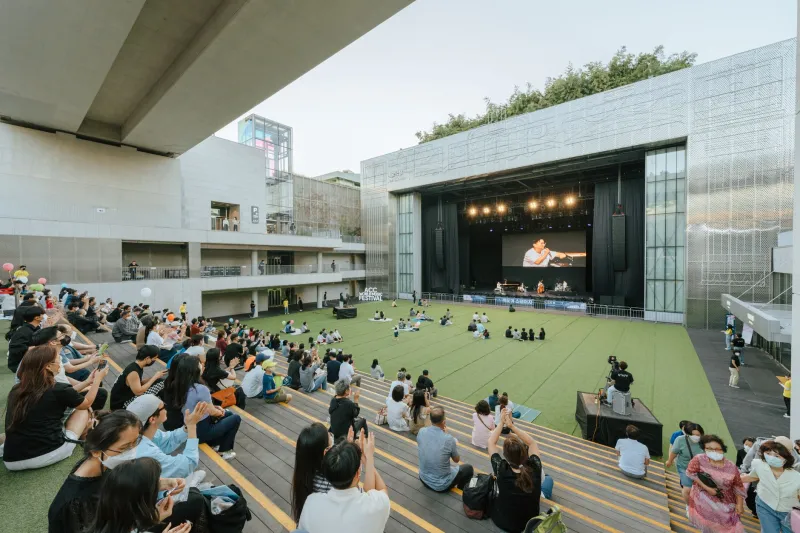
Somewhere between the second set on Saturday and my third cup of makgeolli, it hit me: nobody around me was talking. Not during the ballad, sure — that's expected — but not during the drum solo either, not during the awkward tuning lull, not even while the saxophonist introduced his bandmates in halting English. A few thousand people, packed shoulder to shoulder on tarps along the Bukhan River, were simply listening. Together. On purpose.
If you've spent your festival life at Newport, Monterey, or the Newport Folk crowd next door in Rhode Island, this might sound alien. And honestly? It kind of is. But after four days at Jarasum, I came home convinced that Korean audiences have figured out something American festival-goers have been fumbling for decades.
The Politeness Isn't Passivity
First, let's kill the stereotype. The quiet between songs at Jarasum isn't the hushed, buttoned-up restraint of a symphony hall. It's closer to what happens when everyone at a dinner table pauses because the food is that good.
Between numbers, the crowd hums — literally and figuratively. People murmur to their neighbors, refill soju cups, adjust their camping chairs. Then the band counts in, and the murmur drops out like someone flipped a switch. The contrast makes the music land harder. When the applause finally comes, it's a release, not a reflex.
Compare that to the American habit of whooping through the first eight bars of a ballad because you recognized the tune. I've done it. You've done it. We mean well. But at Jarasum I heard a Korean trumpeter play an unaccompanied chorus so quiet you could hear his valves, and it worked because the crowd let it work. Nobody robbed him of the dynamic range.
The Tarp Is the Real Venue
Here's the part that surprised me most: the listening culture and the picnic culture aren't separate things. They're the same thing.
On Jarasum Island, your patch of tarp is your home base, and everyone's home base abuts everyone else's. By day two, the group behind us was sharing fried chicken with strangers. The family to our left had adopted a solo traveler from Australia. When a set ended, the applause rippled out and then everyone turned back to their picnic — fried chicken boxes, instant ramen cooked on shared stoves, watermelon cut with the kind of knife skills that made my plastic spork look tragic.
This is the block party model, and it changes the social physics of a festival. In the US, the lawn at an outdoor show tends to be a sea of individual pods: your blanket, your group, your cooler. Conversation with strangers happens in line for the porta-potties, if at all. At Jarasum, the seating arrangement practically requires community. You're borrowing someone's corkscrew by hour two.
And here's the kicker — the communal setup made me a better listener. When the music resumed, I wasn't half-watching Instagram. I was rejoining a crowd that had collectively decided, again, to pay attention.
What We Get Wrong Back Home
I don't want to romanticize. American jazz crowds have their own deep traditions, and the club culture of Chicago, New Orleans, or the Village can't be replicated by etiquette rules. Loud is sometimes right. The shout-along at a second-line parade is sacred. I'm not asking anyone to shush Grandpa at Preservation Hall.
But there are three habits I brought home from the river that translate beautifully to Newport, the Detroit Jazz Fest, or your local summer series in the park:
1. Treat the between-song silence as part of the show. Resist the urge to fill it. Let the last note decay. You paid for those three seconds of reverb.
2. Feed your neighbors. Literally. The cooler economy at Jarasum runs on generosity. Offer the chips. Share the good spot in the shade. It sounds corny, but the music hits different when you're not anonymous.
3. Stay for the whole set. Korean audiences settle in for hours, not single acts. The best moment I saw all weekend happened during a headliner's deep cut — a song most drop-in crowds would have missed while grabbing dinner.
The River Changed My Ears
I'll be honest: I went to Jarasum expecting a travel story — the island, the crossing, the novelty of a jazz fest in a Korean river town. I came back with an audience story instead.
There's a phrase Koreans use, jeong, that loosely describes a warm, unspoken bond between people who share space over time. It's the reason strangers hand you tteokbokki. It's also, I think, the reason the crowd listens so well — they're not an audience of individuals tolerating each other until the headliner starts. They're a temporary neighborhood, and the band is the block's shared living room.
You can't import jeong in your carry-on. But you can practice it. Next festival season, back on American soil, I'm packing a bigger blanket, extra snacks, and a resolution: fewer whoops, longer silences, more neighbors.
The river's a long way off. The habits, though? Those cross the Pacific just fine.