No Assigned Seats, No Problem: The Unwritten Rules of Tarp Territory on Jarasum Island
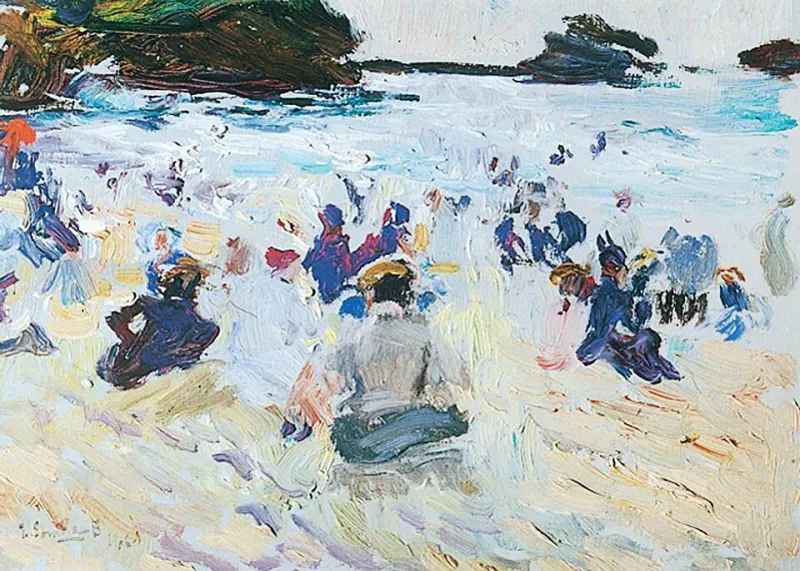
Photo: Joaquín Sorolla, Public domain, via Wikimedia Commons
Somewhere around hour six of my first Jarasum Jazz Festival, a woman in her sixties handed me half a purple sweet potato, pointed at my sagging tarp, and said something in Korean I didn't understand. I smiled, nodded, and she took that as permission to walk over and fix it herself, re-securing a corner with a spare stake she apparently carried for exactly this situation.
That was my introduction to what I've come to call the tarp social contract — the invisible set of rules that governs how thousands of strangers share a river island for one October weekend. For American festival-goers raised on assigned seating, wristband tiers, and the sacred belief that the space you paid for is yours, it takes a minute to adjust. Once you do, it's hard to go back.
First Come, First Served — But Not Really
The basics will feel familiar. Arrive early, spread your tarp, claim your patch of grass. At Bonnaroo or Outside Lands, that's where the social contract ends: this square is mine, that square is yours, and eye contact beyond the boundary is optional.
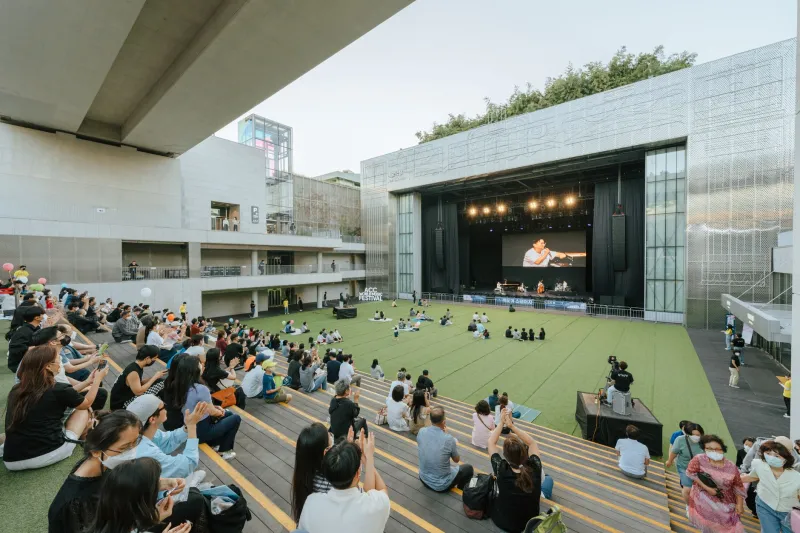
Jarasum runs on a different operating system. Yes, your tarp marks your spot. But the gaps between tarps — and there are always gaps, because nobody packs in like sardines here — belong to everyone. That's where kids chase each other, where a folding table of shared snacks materializes, where someone's uncle sets up a battery-powered fan that he'll gesture for your overheated group to enjoy.
The unwritten rule isn't "protect your territory." It's "leave the seams better than you found them."
The Borrowing Economy
American festivals run on transactions. Forgot a blanket? That's $40 at the merch tent. Need a bottle opener? Hope you brought one.
On Jarasum Island, the default move is to look around, make eye contact with a neighbor, and ask. Stakes, mallets, tape, a lighter, a corkscrew — the tarp republic runs on a lending library nobody organized. I watched a guy lend his entire canopy to the group behind him overnight so their gear wouldn't soak in a rain squall. He'd known them for roughly ninety minutes.
This isn't to romanticize it into something it isn't. People still stake claims. There are still early birds and sprawlers. But the presumption of the place is cooperation, not defense, and you feel the difference in your shoulders by day two.
The Kimchi Diplomacy Protocol
Here's the part that catches US visitors most off guard: food moves. Korean festival culture has a long tradition of sharing — a big container of kimbap gets opened, and suddenly the neighboring tarp is being offered pieces whether they asked or not. Declining once is polite. Declining twice is an insult.
My advice: bring something shareable the moment you set up. A bag of tangerines, a box of Choco Pie, anything. Put it in the middle of your tarp, visible. You have just joined the neighborhood. Expect dried persimmon, hot barley tea, and at least one grandmother insisting you eat more in return.
Compare that to the tailgate mentality back home — generous, sure, but within your own group. Jarasum's generosity radiates outward to whoever happens to be downwind.
A Survival Guide for the Structurally American
A few practical notes if this all sounds appealing but slightly terrifying:
- Bring a proper ground tarp, not a beach towel. The grass is real grass, sometimes damp. Locals use thick blue or silver tarps with reinforced grommets.
- Pack extra stakes. They're cheap at Daiso in Seoul, and they double as social currency.
- Learn two phrases: eodi gaseyo? ("where are you going?") and mashisoyo ("it's delicious"). The first starts conversations; the second keeps invitations flowing.
- Don't build a fortress. Tall pop-up canopies with walls are technically allowed but read as unfriendly. Low and open wins.
- Expect your neighbors to watch your stuff. This cuts both ways — leave a stranger's bag alone, and trust yours with a stranger. The theft rate will shock anyone who's done a weekend at a US fest.
Why the Tarp Is the Real Headliner
We cover the lineups, the stages, the acoustics off the Bukhan River — all of it earns the hype. But ask anyone who's been, and the thing they describe with the most wonder is usually small: the family who shared their tarp during a downpour, the guy who fixed your shade structure without being asked, the soup that appeared because you complimented someone's lantern.
American festivals sell you a plot. Jarasum hands you a neighborhood. The tarp isn't just where you sit — it's the whole argument the festival makes about how strangers can treat each other. Come for the horn sections. Stay long enough to borrow a stake.