Coffee, Crew, and Birdsong: Jarasum's Unadvertised Sunrise Slot
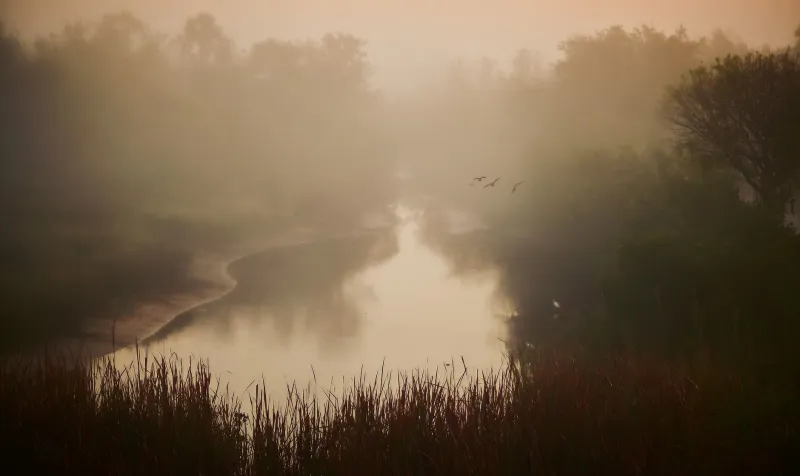
At 6:04 a.m., Jarasum Island is not silent. It's quiet in a different key — the one where a stage crew's ratchet becomes a percussion instrument and a heron taking off from the shallows sounds like someone ripping a page out of a very large book.
I know the exact time because I'd set an alarm, which felt like a borderline insane thing to do at a music festival. I'd flown in from Chicago, I'd stood in a field for three days, and my knees had opinions. But a friend who'd been to Jarasum before gave me one piece of advice before I left: the island has a second setlist, and it starts before the coffee cart opens.
She was right. Here's what you get for trading two hours of sleep.
The Island Has a Curfew, Not an Ending
The stages go dark. The last shuttle fills up. The floodlights over the main field click off one bank at a time, and the whole place seems to exhale. What most visitors read as it's over is really just a shift change.
By first light, a completely different population has the island. You'll spot them on the walk back from the camping zone: crew members in windbreakers coiled around paper cups, a woman in a volunteer vest sorting recycling with the focus of a surgeon, a couple of early risers doing stretches on the grass where a brass section stood eleven hours earlier. The guitar cases are stacked and zip-tied. The cable ramps are being pulled up like a farmer pulling carrots.
Nobody is performing. That's the point. This is the festival with its makeup off, and it's strangely more intimate than anything that happened under the lights.
What 6 A.M. Actually Sounds Like
Start with the obvious: birds. Jarasum sits on a river island, and the riverbank at dawn is basically an aviary with a view. Ducks, herons, the small brown stuff that chirps in the reeds — they're loud in a way that recorded sound never is, because there's nothing competing with them.
Underneath that: water. The current around the island has a low, steady hush that I'd completely stopped hearing by day two. At dawn, with the PA off, you hear it again.
Then the human layer arrives in fragments. A hand grinder. A thermos being opened. Someone laughing once, briefly, then hushing themselves. A crew member testing one channel with a single tap-tap on a mic — proof that soundcheck is coming but hasn't started. And somewhere near the tent rows, almost always, a traveler with an acoustic guitar playing something soft and unfinished, badly and happily.
It's not jazz. It's the room jazz happens in.
The Coffee Line Is the New Front Row
Here's the practical discovery: the coffee vendors who get set up first are the ones with the shortest lines all weekend, and at dawn you can walk right up. No crush. No shoulder-tapping. Just a paper cup of something hot and a vendor who's willing to explain, in patient half-English, what you're actually drinking.
I ended up in a twenty-minute conversation with a woman running a cart near the main gate about why Koreans take their iced Americano so seriously. She handed me a second cup, refused my money, and told me to go watch the fog lift off the water before I wasted the morning.
I did. The far bridge was a smudge. The stage roof was a silhouette. A few tents had condensation beaded on them like they'd been rained on. For about fifteen minutes, the island looked like it had never had a festival on it at all — and also like it couldn't wait to have one again that afternoon.
Who Else Is Awake, and What to Say
A few notes on etiquette, since a dawn crowd is a small, voluntary, unspoken club:
Don't interview the crew. They're at the end of a long shift or the start of a longer one. A nod is plenty.
Do match the volume. If you're the loudest person on the riverbank at 6 a.m., you've misread the room. Think library with better acoustics.
Bring a layer. The temperature on the water before sunrise is not the temperature in the field at 2 p.m. I wore a fleece over a T-shirt and still wished for a hat.
Watch where you walk. The crew is moving gear along marked paths. If a ramp is up, don't play hurdler. A five-second detour beats being the tourist someone has to stop.
Ask before you photograph. Nobody's going to say yes while balancing a coffee and a clipboard, and that's fine. The image in your head works too.
Why US Travelers Get a Free Pass on This One
Here's the hidden advantage nobody mentions: if you flew east across the Pacific, your body clock is already running several hours ahead. The 6 a.m. alarm is the one alarm your jet lag will happily enforce. Lean into it. Instead of fighting to sleep through a sunrise you'll never see again, get up, get outside, and let your internal clock feel useful for once.
Think of it as the reverse of the American festival model, where the gates open at noon and the day is a slow, sunburned crawl toward the headliner. On Jarasum, the day has a secret prelude — one that costs you nothing, has no wristband tier, and doesn't sell out.
How to Do It Without Wrecking Your Weekend
You don't have to be a hero about this. Set one alarm, not four. Pick the morning after your lightest night, not the one following the set you'll be talking about for a year. Bring water. Bring the fleece. Give yourself until eight, then go back to the tent, eat something, and nap until the first soundcheck. Nobody will judge you. Half the island is doing the same thing.
The thing I keep telling people back home isn't about any particular performer. It's that a festival is a place that happens in time, and most of us only buy tickets to the loud parts. The island gives you the quiet parts free — you just have to be the kind of person who sets an alarm.