The Second Set Starts When the Stages Go Dark: Finding Jarasum's After-Hours Jam Scene

Photo: TwinsofSedona, CC BY-SA 3.0, via Wikimedia Commons
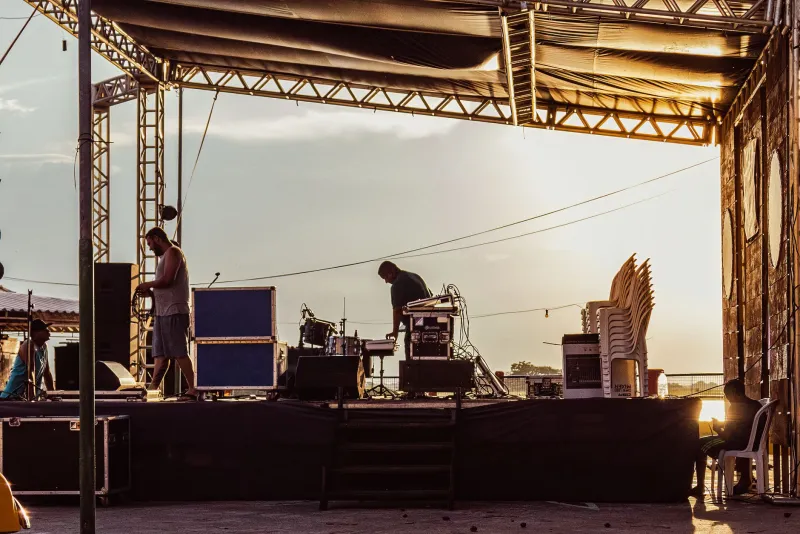
Jarasum has a way of making the official schedule feel like a suggestion. You watch the last headliner, the lights come up, the crowd starts folding toward the exits, and you think the festival is over. Then you hear a trumpet somewhere near the campground. Or a guitar through an open hotel window. Or a cluster of people laughing behind a bar that looked closed ten minutes ago. The music didn't stop. It just got smaller, closer, and a lot harder to find unless you know where to look.
The Real Last Call Is a Chord Change
On paper, Jarasum has a closing time. In practice, the festival has two endings. There's the official one, when the main stages go dark and the shuttles start lining up. Then there's the unofficial one, which happens in hotel lobbies, nearby bars, and campground circles where musicians and fans keep playing because nobody is quite ready to call it a night. These aren't scheduled events. They don't show up on the app. They're word-of-mouth, weather-dependent, and sometimes over before you finish your drink. That's exactly why they feel like the best-kept secret on the island.
For U.S. visitors, the after-hours scene can feel familiar and strange at the same time. It has the loose, anything-goes energy of a late-night jam in New Orleans or a Brooklyn bar after the headliner has already left the building. But it comes with a Korean festival rhythm: quieter, more communal, and built on a kind of unspoken respect that keeps the music going without turning into a free-for-all.
Where the Music Migrates After Midnight
The after-hours scene isn't one place. It's a handful of small ecosystems, each with its own vibe and its own risks.
Hotel Lobbies and the Art of the Quiet Jam
Hotels near Gapyeong and Chuncheon are the most reliable bet for travelers who want music without sleeping on the ground. After the festival, musicians who are staying nearby often drift into lobbies with a guitar, a cajón, or just a harmonica. Sometimes it's a full-on jam. Sometimes it's two people working through a standard while everyone else orders one more round of beers. The best lobbies are the ones with comfortable seating, late hours, and staff who are tolerant but not invisible. If you're staying in one of these hotels, you're already in the right place. If you're not, don't just wander in like you own the place. Buy something, ask the front desk if it's okay to sit, and read the room.
The Bar Circuit in Gapyeong
A short taxi ride from the festival grounds, a few bars and restaurants become unofficial green rooms after the stages close. You'll see festival wristbands, instrument cases, and people who look like they haven't slept since Thursday. These spots are less about formal performances and more about whoever happens to be around. A drummer might sit in with a house band. A singer might do one song and then disappear. The vibe is casual, but the etiquette is not optional. Don't ask for a specific tune. Don't film without asking. And if you're going to hang around, keep ordering something.
Campground Circles: The Most Fragile and Best Scene
The campground is where the after-hours scene feels most like a secret. Small groups gather around lanterns, coolers, and portable speakers. Someone brings out a guitar. Someone else knows the words. A festival musician who couldn't find a ride back to the hotel might join in for a few songs. These circles are magic precisely because they're fragile. They depend on quiet hours, respectful neighbors, and the understanding that not everyone in a tent wants to hear a Grateful Dead cover at 2 a.m. If you find one, treat it like a guest. Ask before you sit. Don't take over. And know when to say goodnight.
How to Join Without Ruining It
The fastest way to kill an after-hours jam is to act like you're owed a spot in it. The people playing are tired, often a little drunk, and usually playing for themselves more than for an audience. Your job is to be easy to have around. Start by listening. If there's a gap in the circle, ask if you can sit. If you play, ask if there's a song they'd like to hear rather than launching into your own set. If you don't play, be the person who brings water, snacks, or a phone charger. That's not a joke. The person with a portable battery is welcome everywhere.
There's also a language gap to navigate. You don't need fluent Korean to join a jam, but a few phrases go a long way. 'May I sit here?' is a good start. 'That was great' works after any song. And if someone offers you a drink, accept it or decline politely. Don't make a thing of it. The scene runs on small gestures, not grand ones.
The Practical Stuff U.S. Visitors Get Wrong
The biggest mistake is assuming the after-hours scene runs on the same schedule as the festival. It doesn't. Some nights it's lively until 3 a.m. Other nights it's over by midnight. Weather, fatigue, and the next day's schedule all play a role. Don't build your entire night around a rumor. Have a backup plan, whether that's a hotel lobby, a late-night restaurant, or a taxi back to your accommodation.
Transport is the other big one. The last official shuttle or bridge walk back can be earlier than you think, especially if you're staying off the island. Check the 2026 festival schedule and have a backup. Download Kakao T for taxis and Naver Map for navigation. Carry cash for late-night rides and small purchases. And keep your phone charged. A dead phone at 1 a.m. on a riverbank is a special kind of loneliness.
If you're staying in Seoul and commuting, be honest with yourself about the cost and the time. The train back can be doable, but the after-hours scene rewards people who are staying close. Gapyeong and Chuncheon give you more flexibility and a shorter trip home when your ears are ringing and your feet are done.
Why This Scene Exists at All
The after-hours jams aren't an official festival feature, but they're not an accident either. Jarasum attracts musicians who actually like each other. The lineup mixes Korean jazz, gugak, and international acts, and the island format encourages cross-pollination during the day. By the time the stages close, those connections have had a chance to turn into something looser. A drummer who played a main-stage set might end up in a hotel lobby with a guitarist from another country. A fan who brought a harmonica might get a nod to join in. These moments aren't advertised because they can't be. They're the festival's rewards for people who stay curious and stay a little longer.
That's the thing about Jarasum. The river keeps moving, and so does the music. The official program gives you the big moments. The after-hours scene gives you the ones you'll be talking about on the plane home.
The Morning After
If you do find yourself in one of these late-night circles, remember that the people playing are not a free show. They're festival workers, musicians, and fans who are choosing to spend their last bit of energy on music. Be generous. Be quiet when it's time to be quiet. And when the circle finally breaks up, say thank you and mean it. The best way to keep Jarasum's after-hours tradition alive is to leave it exactly as you found it: small, spontaneous, and a little bit secret.