When the River Does the Soundcheck: The Hidden Acoustics of an Island Stage
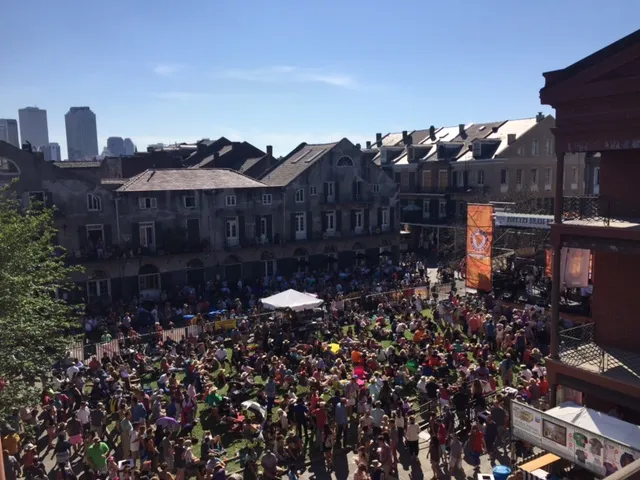
Photo: NOLA Jazz Museum, CC BY-SA 2.0, via Wikimedia Commons
There's a moment at Jarasum that regulars talk about the way fly fishermen talk about a perfect cast. The sun drops behind the western bank of the Geum River, the temperature dips just enough to justify the hoodie you stuffed in your bag, and a saxophone solo starts drifting across the water from the main stage. It doesn't just sound good. It sounds placed — like the river itself is doing the mixing.
That's not romantic nonsense. It's physics, and it's the reason a lot of us keep flying 12 hours to a river island in Gapyeong County when there's a perfectly good festival within driving distance of most American cities.
Water Changes Everything About Sound
Sound behaves differently over open water than it does over a grass field or a parking lot, and the difference is bigger than most people realize. Hard, flat surfaces like water reflect sound waves rather than absorbing them, which means less of your high-end energy gets swallowed up by the ground. On a still evening, cool air near the water can also bend sound waves back down toward listeners — an effect acousticians call refraction — which is why a horn section can carry further and cleaner across the Geum than it ever would across a fairground.
"Think of the last big outdoor show you went to in the States," says one US-based live sound engineer who worked a Jarasum season and asked to remain anonymous because, well, festival politics. "You're standing on dirt and trampled grass, there's a generator humming somewhere, and the sound just kind of dies a hundred feet out. At Jarasum, the whole island is basically a reflective bowl with a river running through it. The venue is doing half the engineer's job."
The Tide of the Crowd
Here's the part nobody puts on a poster: the geography doesn't just shape the sound. It shapes the people.
Because Jarasum Island is surrounded by water on all sides, festival-goers can't sprawl. There's no distant parking lot half a mile from the gates, no side exits, no drifting away to the food trucks during a quiet ballad. When the sun sets and the headliners start, the crowd compresses toward the stages almost naturally, the way water pools in a basin. The result is an audience that listens — genuinely listens — because there's nowhere else to be.
American festival vets will recognize the contrast immediately. At big US events, the crowd is a series of overlapping tribes: the beer garden crowd, the merch line crowd, the people filming from the back who are technically at a different festival than you. On an island, everyone's in the same boat. Literally, if they took the shuttle.
What American Promoters Keep Getting Wrong
A wave of US festivals have chased the "destination" branding in recent years — waterside events in the Pacific Northwest, riverfront stages in the Midwest, desert gatherings with palm trees flown in. Some are lovely. But most treat the site as a backdrop, a pretty thing to photograph, rather than an instrument.
Jarasum's approach is the opposite: site-first. Stage placement follows the river's sightlines. Set times account for when the light hits the water. Even the camping zones are arranged around how sound travels at night, keeping the late-night jam sessions far enough from the main stages that neither interferes with the other. It's the difference between building a festival on a location and building one out of it.
The lesson for American promoters isn't complicated, but it is expensive: stop renting a field and calling it a vibe. Walk the land at dusk. Listen to where the sound goes. Let the geography headline.
How to Hear It for Yourself
If you're planning a first trip — and after reading this, you might be — here's the pro move. Skip the first set of the evening. Grab a spot on the eastern edge of the island with a clear view down the river, about 20 minutes before sunset. As the light fades and the air cools, you'll catch the exact window when the water starts carrying the music. It's the cheapest upgrade at the festival, and it doesn't cost a thing.
Bring a light layer, leave the noise-canceling headphones at the hotel, and let the river run the board for a night. You'll never hear a riverside show in the States the same way again.