Folding Chairs, Face Paint, and a Grandma Who Outlasted the Headliner: Meet the Real Jarasum Lineup
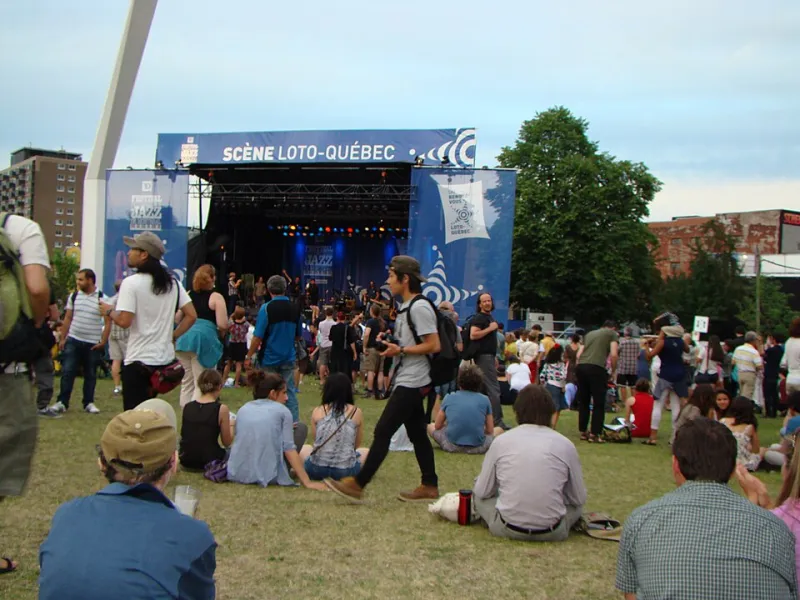
Photo: Zahav511, CC BY-SA 3.0, via Wikimedia Commons
Somewhere between the second chorus of a late-afternoon set and the smell of grilled squid drifting over from the food tents, I realized I'd stopped taking photos of the musicians.
Not because the music wasn't good — it was excellent. But because every time I raised my camera, something more interesting was happening behind me. A silver-haired woman in a bucket hat doing a slow, deliberate two-step. A dad pouring barley tea into tiny cups for strangers. Three college kids who'd taken the last train from Seoul, asleep in a human pile before the encore.
Here's the thing nobody tells you before your first Jarasum International Jazz Festival: the artists are the reason you buy a ticket, but the audience is the reason you come back.
The Retirees Who Got There First
If you want to understand Jarasum, watch who sets up camp before the gates officially feel alive. It's not the twenty-somethings. It's couples in their sixties and seventies who arrive with the seriousness of a military operation: padded folding chairs with cup holders, insulated bags of homemade kimbap, thermoses, and cushions that suggest decades of festival experience.
I met Mr. and Mrs. Park — well, I met them, bowed, and communicated mostly through smiles and a translation app — on their twelfth consecutive Jarasum. They drive in from Daejeon every October. Mrs. Park told me, through the app, that she likes "the sad trumpet songs" and that her husband likes "everything else."
In the States, our festival culture skews young and expensive — think of the average age and average ticket price at your typical Coachella or Newport outing. Jarasum inverts that. Retirees aren't a novelty here; they're the institutional memory. They know which patch of grass floods, which stage gets the river breeze, and exactly when to claim their spot.
The Chair People
Let's talk about the folding chairs, because if you're coming from the US, this will be your biggest culture shock — a pleasant one.
At American festivals, you stand. You stand for hours, your lower back files a formal complaint, and if you want a seat, you pay for VIP turf. At Jarasum, nearly everyone brings a compact chair or a picnic mat, stakes out a patch of the grassy field between stages, and treats it as their living room for the weekend.
This changes everything about the social dynamics. People chat with their neighbors. Kids wander between family camps. Someone's grandmother will offer you a tangerine, and refusing is not really an option. The chair isn't just furniture — it's a declaration that you plan to be here all day, comfortably, and that the person next to you probably will too.
Buy a cheap chair at a Daiso or a Homeplus when you land. Consider it the best $10 accessory in festival travel.
The Seoul Commuters
Then there's the other end of the demographic spectrum: young Seoulites who treat Jarasum like a city escape with a soundtrack. They take the train up Friday evening — Gapyeong station is a short shuttle ride from the island — many carrying camping gear in enormous backpacks, all of them carrying phones full of the lineup saved to their calendars.
They're a different species from the chair people. They move. They stage-hop. They form loose, shuffling crowds at the front of the main stage and drift back to their friends' camps between sets. If the retirees are the festival's foundation, the commuters are its circulation — the reason the grounds feel alive at midnight and again by 8 a.m.
Talk to a few and you'll hear the same refrain: it's the cheapest mental health break in Korea. Two nights under the stars, world-class music, river air, and a Sunday evening train back to reality.
The Families in the Back
Look past the stage lights and you'll spot them: parents with toddlers asleep on mats, grandparents supervising kids who are conducting invisible orchestras with glow sticks. Jarasum is one of the few festivals I've attended anywhere where a three-generation family group feels completely normal rather than remarkable.
For American travelers used to festivals being an adults-only proposition — or a very expensive family negotiation — this is quietly revolutionary. Nobody blinks at a kid napping through a saxophone solo. The music is the backdrop; the togetherness is the point.
Why This Matters for Your Trip
Here's my practical takeaway for US festival-goers planning the pilgrimage: don't plan your Jarasum weekend around the schedule alone. Plan it around the people.
- Arrive early enough to claim grass real estate near the main stage — you'll want a home base.
- Bring or buy a chair and a mat. You'll use both constantly.
- Accept the tangerine. Accept the barley tea. Say yes to the neighborhood.
- Learn to say hello and thank you in Korean — even a cheerful "annyeonghaseyo" opens doors.
American festivals market themselves on who's playing. Jarasum's real headliner is a seventy-four-year-old woman in a bucket hat who danced through an entire set I was supposed to be watching, and who taught me more about the festival in one afternoon than any program book could.
The artists were great. But the crowd? The crowd was the show.