Ninety Seconds of Water: Why the Crossing to Jarasum Is the Festival's Real Opening Act
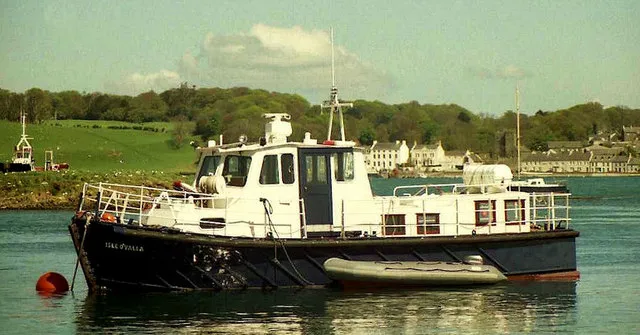
Photo: Albert Bridge, CC BY-SA 2.0, via Wikimedia Commons
The Ticket Stub You Keep
There's a moment on every festival trip that photographers miss and headliners can't replicate. At Newport, it's the walk down the lawn. At Monterey, it's the fog rolling over the fairgrounds. At Jarasum, it's smaller and stranger: a ninety-second boat ride across the Gapyeong section of the Han River, during which nobody says anything particularly profound and everybody remembers it forever.
The ferry to Jarasum Island takes less time than a soft drink refill. And yet, by the time you step off onto the island, the person who helped you steady your tote bag feels like a bandmate.
What Happens in Those Ninety Seconds
I rode the crossing four times over a festival weekend, mostly to figure out why it stuck with me. Here's the pattern:
- Boarding: Pure logistics. People check phones, adjust folding chairs slung over shoulders, count their group. The energy is airport-adjacent — anticipation wrapped in mild anxiety.
- Mid-crossing: Something shifts. Someone hums. Someone asks, in halting English or Korean or both, "First time here?" Phone cameras come out, not for the view — it's a river and a small island — but for proof of passage.
- Approach: The stages come into view. The hum gets louder. Someone starts a low, improvised rhythm with their palm on a rail, and — I'm not making this up — two strangers locked into it without a word.
It's the only ferry I've ridden where the passengers effectively do a soundcheck on themselves.
A Liminal Space, In the Best Sense
Anthropologists have a term for in-between states: liminality. It's the doorway between who you were at home and who you get to be on the trip. Theme parks engineer it deliberately — you pass through a tunnel, a gate, a turnstile. Jarasum's version is water.
For American festival-goers used to parking lots and shuttle buses, the crossing does something a shuttle never can. It puts a small pause between your ordinary self and your festival self. You can't scroll through it. You can't skip it. You're standing on a deck with a couple from Austin, a student from Osaka, and a retiree from Gapyeong who's clearly done this crossing a hundred times and finds all of you amusing.
By the time the ramp drops, you've exchanged Instagram handles with at least one person you'll wave at across the crowd all weekend.
The Unofficial Etiquette of the Crossing
A few things I learned, so you don't have to learn them the hard way:
- Pack light for the ride. The ferry is short but the loading is real. A wagon with big wheels beats a duffel you have to hug.
- Let the locals board first if the line is tight. Many are day-trippers who know the rhythm. You'll get there either way — the island isn't going anywhere.
- Talk to somebody. This is the entire point. The person next to you has a tip about which stage gets shade at 4 p.m.
- Look back on the return trip. Everyone photographs the island on the way over. The better shot is the mainland on the way back — the festival behind you, glowing.
Why It Works
There's a musical metaphor here that's almost too easy, but stick with me: an overture isn't the show. It's the thing that tunes the room. It takes a collection of individuals and gives them a shared key. The ferry does that in ninety seconds flat — no lineup announcement required.
Every festival wants a sense of community. Most try to build it with lighting rigs and app-based meetups. Jarasum gets it for free, every few minutes, one short ride at a time. The river does the intro. The island does the rest.
So when you make the trip — and if you're reading this site, you're probably already pricing flights — treat the crossing as part of the show. Put your phone down for one of the two minutes. Hum something. Ask the Austin couple where they're staying.
The music starts when you think it does.