The Guy Who Handed Me a Cold Beer Was the Best Trumpet Player I Heard All Weekend
Photo: Aliansvit, CC BY-SA 4.0, via Wikimedia Commons
Somewhere between my second and third Hite, the volunteer working the drink tent started humming along to the stage soundcheck. Then he corrected the horn line under his breath. Then he asked — in nearly perfect English — if I thought the front line was too far downstage.
His name was Minjae. Twenty-two, music student, volunteer badge, lanyard, the whole deal. Three hours later, during a late-afternoon set, he was standing next to the bandleader with a trumpet in his hand.
That's the thing about Jarasum nobody puts in the brochure. The festival runs on people who would be there anyway.
The Invisible Crew That Isn't Invisible
If you've only ever been to US festivals — your Lollapaloozas, your Newports — you've probably interacted with staff exactly twice: the person who scanned your wristband and the person who told you the porta-potty line was the other line. At Jarasum, the crew is woven into the experience in a way that takes American visitors a day to notice and a day and a half to fall for.
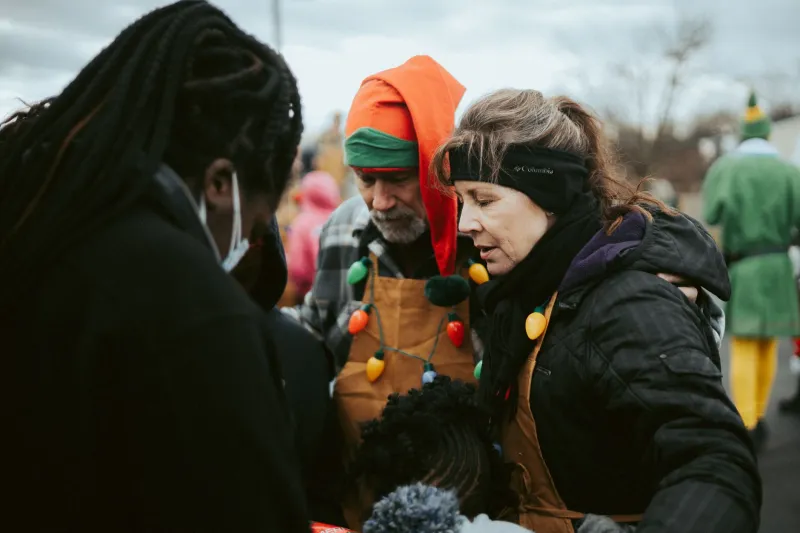
The volunteer corps is a few hundred strong, most of them Korean college students, some of them returnees who've done five, six, seven festivals. They run stage transitions, wrangle the artist shuttles, staff the info booths, and — critically for those of us whose Korean vocabulary tops out at "kimchi" and "thank you" — they translate. Constantly. Patiently. Without making you feel like the clueless American you are occasionally being.
My personal guardian angel was a woman named Sohee who worked the main gate and, over the course of the weekend, talked me out of a bad ferry decision, into a better dinner decision, and once physically steered me toward a stage where something special was about to happen. She was never wrong.
Rigging a Stage on a River Island
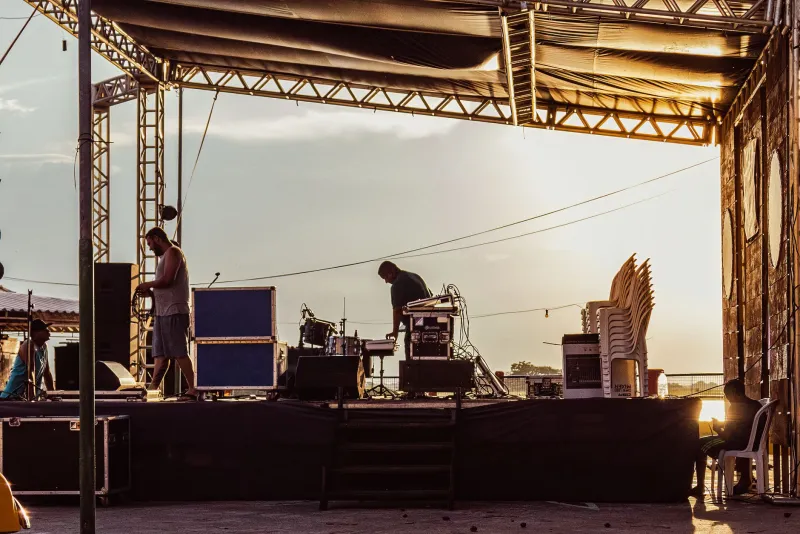
I got a glimpse of the setup side thanks to a volunteer coordinator who took pity on a journalist hovering near a forklift. Building Jarasum is a logistical puzzle that would make an Eagle Scout weep: multiple stages on an island in the North Han River, equipment barged and trucked in, everything weatherproofed against a Korean autumn that can go from blue skies to sideways rain between sets.
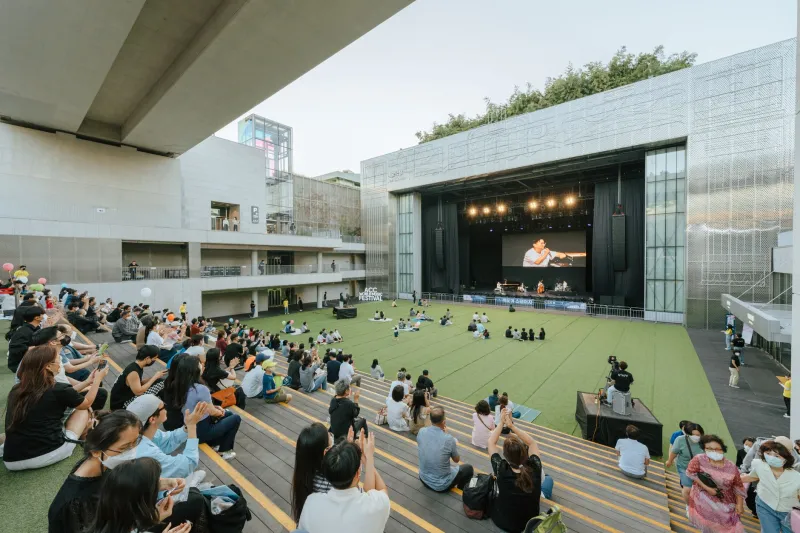
The stage crews — a mix of professionals and experienced volunteers — start days before the first note. By the time ticket-holders arrive, the transformation is complete: grass fields become venues, tent cities become neighborhoods, and a quiet river town becomes, briefly, one of the denser concentrations of live jazz on the planet.
What struck me most was the tone. Nobody I talked to described it as a job. One rigger who's done both Coachella-scale US gigs and Jarasum put it to me this way: "In America, the crew works for the festival. Here, the crew is the festival."
So You Want to Volunteer
Here's the practical part, because I know some of you are already googling.
Applications open months out. The festival recruits volunteers in waves, typically starting in late spring for the fall event. The application goes up on the official Jarasum Jazz Festival site and their social channels — follow them and set an alert, because popular roles fill fast.
Yes, international applicants are welcome, though the bulk of spots go to Korean speakers. Where foreigners shine is in the international guest services and interpretation roles — if you're a native English speaker with functional Korean (or even enthusiastic tourist Korean), you're genuinely useful, not a novelty hire.
What you get: shift meals, a volunteer uniform (wear it with pride; it's a conversation starter), staff-zone access, and the kind of festival experience no GA wristband buys. You'll work hard — expect long days and some unglamorous assignments — but you'll also watch a stage get built, watch artists walk in as regular humans, and possibly, if you're Minjae, end up sitting in with the band.
Plan your own logistics. Volunteering doesn't typically include flights or lodging, so pair your application with the usual survival guide advice: book Gapyeong accommodation early, pack for weather, arrive with days to spare.
Why This Matters More Than the Lineup
Look, the lineup announcement is the sexy story, and we'll cover it like everyone else. But festivals are remembered by how they felt, and the feeling at Jarasum is manufactured by several hundred people who chose to spend their autumn hauling cable on a river island.
There's a lesson in there for US festival culture, honestly. We've professionalized everything — VIP tiers, express lanes, upcharges for shade. Jarasum hasn't entirely avoided that, but the volunteer backbone keeps it feeling like a community event that happens to book world-class talent, rather than a corporation that happens to book a community.
On my last night, I found Minjae after his set, trumpet case at his feet, back on beer duty within the hour. I asked if he was tired.
"Every year," he said. "Same tired. Good tired."
Then he handed me a cold one, on the house, and went back to work. Best trumpet player I heard all weekend. Don't tell the headliners.