Get Ahead of the Hype: 5 Korean Jazz Artists You Should Stream Before They Headline Jarasum
Photo: Guitarheroine at English Wikipedia, CC BY-SA 3.0, via Wikimedia Commons
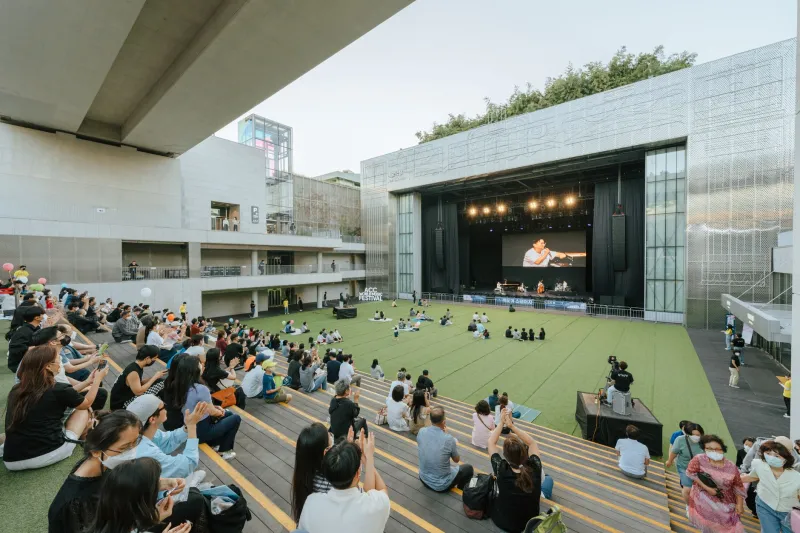
Every festival veteran knows the move: the artist playing the small stage this year headlines the big one in three. And if your festival of choice is Jarasum — the river-island jazz gathering outside Seoul that keeps showing up on American travelers' radars — the small-stage-to-headliner pipeline is very real.
So consider this your scouting report. Five Korean artists with the chops, buzz, and momentum to top a Jarasum bill in the next few years. Learn them now, catch them at an afternoon slot on the river, and enjoy telling your friends back home you saw them before the US club circuit did. Because that's how this usually goes — American venues discover Korean jazz a beat behind the Korean festival crowd.
1. Youn Sun Nah's Heirs: The New Vocal Wave
Let's start with the shadow everyone's working in. Youn Sun Nah — the Paris-based Korean vocalist who has played European festivals for two decades — rewired what the world expects from a Korean jazz singer. The current generation isn't copying her; they're answering her.
Keep an ear on Song Yoo-jin (송유진), a pianist-vocalist whose records blend standards with Korean folk melodies so naturally it feels inevitable rather than clever. Her arrangements of traditional minyo over swing rhythms are exactly the kind of cross-cultural material Jarasum programmers love.
Must-hear track: "Arirang (Reimagined)" — the traditional folk song as late-night ballad, all brushed drums and piano restraint.
2. Choi Sung-hwan Trio — Post-Bop With a Seoul Pulse
Pianist Choi Sung-hwan has been quietly building one of the most disciplined trios in East Asia. His records lean post-bop — think early Brad Mehldau's architecture with a distinctly Korean melodic sensibility — and his live sets have a reputation for building from whisper-quiet to full-throated in a single tune.
Why he headlines soon: Jarasum's main stage rewards acts that can hold a big grass field with dynamics rather than volume, and that's precisely his trick. When the festival wants a Sunday-evening, sunset-set artist, this is the profile.
Must-hear track: "Han River at 3 A.M." — seven minutes of patient trio interplay that earns every crescendo.
3. Jambinai-Adjacent: The Fusion Acts Breaking the Genre Wall
Here's where the Korean scene genuinely diverges from the American one. A wave of groups is fusing jazz improvisation with gugak — traditional Korean instruments like the haegeum (a two-string fiddle) and geomungo (a zither you play with a stick). Jambinai blazed this trail into rock and post-rock territory; the jazz-leaning successors are coming up behind them.
Black String is the name to know — a quartet blending jazz, Korean traditional music, and ambient electronics that has already toured internationally and plays with the intensity of a rock band and the vocabulary of a jazz ensemble. They've held down major slots at Korean festivals; the main-stage promotion feels like a matter of time.
Must-hear track: "Mask Dance" — geomungo strings over breakbeat-adjacent drumming, and yes, it goes hard on a festival lawn.
4. The Young Guns: Korea's Conservatory Generation
Seoul's jazz programs — Dongguk, Seoul Arts, and the various NYU-Seoul pipelines — are producing players technically on par with anyone in New York, many of whom did their grad-school years in Brooklyn before coming home. The result is a scene that sounds international but cooks with local heat.
Lee Ji-hyung (이지형) is the trumpeter people whisper about. His small-group records split the difference between Roy Hargrove's warmth and a more angular, modern sensibility, and his side work across K-indie and hip-hop recordings means he arrives with a built-in young audience — something festival programmers notice.
Must-hear track: "Concrete Hanok" — a tune that moves from muted-trumpet noir to open-horn joy in the space of four minutes.
5. The Groove Candidate: Jazz That Makes the Lawn Dance
Every Jarasum lineup needs at least one act that turns the afternoon slot into a block party. Enter Glen Check's jazz-leaning projects and, more importantly, the emerging collective scene around Seoul Community Funk and jazz-funk ensembles — groups channeling everything from Headhunters-era Herbie to modern neo-soul, with Korean lyrics and zero self-consciousness.
Watch for Jowall (주왈) and the loose network of keyboardists and producers around him. This is the sound most likely to migrate from a side stage to a prime-time slot, because nothing books a festival like a crowd that can't stand still.
Must-hear track: "Yeouido Sunset" — clavinet, horns, a bassline that refuses to quit.
Your Pre-Festival Playlist
Stack these five tracks in order and you've got a 40-minute crash course in where Korean jazz is heading: folk-rooted vocals, post-bop trio craft, traditional-instrument fusion, conservatory chops, and festival-ready groove. Add a Youn Sun Nah record for the origin story and you're more prepared than 90% of the international crowd on the island.
And here's the survival-guide part: schedule your afternoons around these emerging acts, not just the names you recognize. Jarasum's programming has a habit of putting future headliners in the 2 p.m. slot on the river stage. The grass is warm, the drinks are cold, and the artist on stage is about to get very famous.
You saw them on an island in Korea first. Feel free to be insufferable about it.