Makgeolli Tents and Midnight Tteokbokki: The Festival Food Case for Booking That Flight
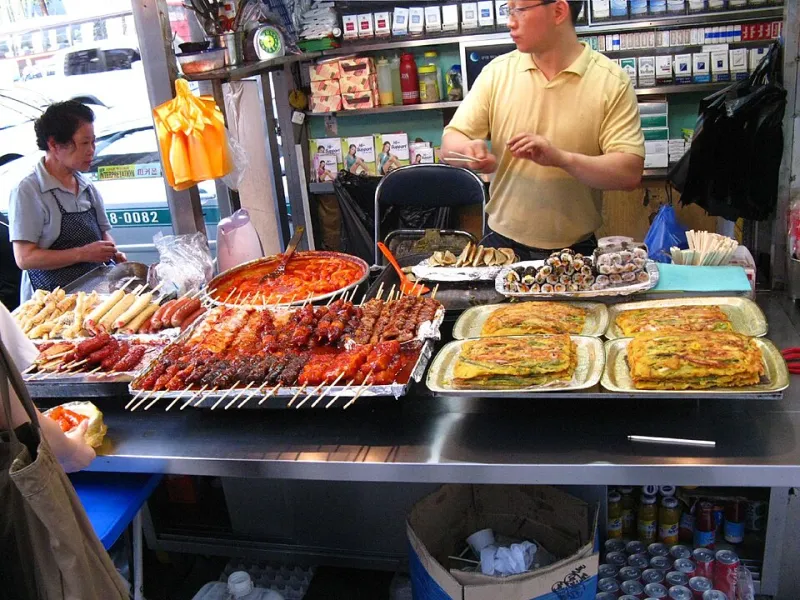
Photo: Ian Armstrong, CC BY-SA 2.0, via Wikimedia Commons
Every American music festival has the same food story. You know it by heart: a row of food trucks, a $16 anything, a line that outlasts the set you paid to see. It's fine. It's fuel. Nobody has ever texted a friend from the port-a-potty line about a festival empanada.
Now let me tell you what's happening at the edge of Jarasum Island while a quartet works through the second chorus.
The Makgeolli Tent Is the Real Green Room
Start here, because this is the heart of the operation. Makgeolli — Korea's cloudy, lightly fizzy rice wine — gets served out of big kettles in plastic bowls at open-air tents scattered around the grounds. It costs a few dollars. It's slightly sweet, faintly tart, and dangerously sessionable.
The ritual matters as much as the drink: you don't pour your own. You pour for the person next to you, they pour for you, and suddenly you've got a table full of strangers debating whether the bass player's solo went on a bar too long. In America, festival drinking is a transaction. Here, it's an invitation.
If makgeolli isn't your speed, the tents also pour soju and beer — but the rice wine is the one with history, and it pairs with outdoor jazz the way a crisp lager pairs with a July ballpark.
The Ranking: What to Eat, In Order of Urgency
1. Hotteok. Sweet pancakes fried to order, stuffed with brown sugar, cinnamon, and seeds. They arrive molten, they cost about two bucks, and eating one while the sun drops behind the river is the single best two-dollar moment in festival-going. Do not skip the cooling wait. Your tongue will test you anyway.
2. Tteokbokki. Chewy rice cakes swimming in a gochujang sauce that starts sweet and finishes with a slow, honest heat. The late-night vendors near the exits are doing their best work after 10 p.m., when the temperature drops and you need something warm and spicy in your hands.
3. Grilled squid and skewers. Smoke drifting across the crowd, skewers of everything from chicken to pork belly turning over coals. Grab one between sets. It's the festival equivalent of a ballpark dog, except it's actually good.
4. Gimbap and fried chicken. The daytime workhorses. Gimbap is portable, tidy, and won't judge you for eating it on a picnic mat mid-solo. And yes — Korean fried chicken at a festival is a real thing, and yes, it's as good as the TikToks promised.
5. Anything at a convenience store. This sounds like a joke until you learn that Korean convenience stores are culinary institutions. A triangle kimbap and an iced coffee from a CU on the walk back to the shuttle is a tradition, not a compromise.
Why This Actually Matters to a Jazz Fan
Here's the argument underneath the food porn: jazz festivals are about atmosphere, and food is atmosphere. The reason Newport feels magical isn't just the music — it's the whole sensory frame around it. Jarasum builds that frame out of steam rising off griddles, the clink of plastic bowls, and the smell of sesame oil cutting through river air between sets.
American festivals treat food as a revenue line. Korean festivals treat it as half the show. When the food stalls are run by vendors who've been perfecting one dish for decades, and that dish costs less than a domestic festival's locker rental, the entire experience shifts. You're not surviving the day between sets. You're grazing your way through a culture, with a soundtrack.
The Verdict
Skip one domestic festival this year. Take the money you'd have spent on truck food, parking, and fees, and put it toward the flight you've been bookmarking. The music will be world-class — that's a given. But the bowl of makgeolli poured by a stranger, the hotteok burning your fingertips at golden hour, the tteokbokki vendor who nods at you like a regular by day three? That's the part you'll be telling stories about.
Coltrane travels well. So does kimchi. Together, at the edge of a Korean river, they're unbeatable.